
Relationships
Track a Person's Terms in Office
Many associations serve members who hold elected or appointed roles, such as mayors, county commissioners, sheriffs, board chairs, and other public-facing positions. These roles often follow defined service periods, and associations need a reliable way to know who is currently serving, who served in the past, and what changes are coming next.
Engagifii gives teams a clear way to manage elected and appointed terms, connect them to the right positions, and keep service histories accurate over time. Staff can track current and past roles, create terms for upcoming election cycles, and update records after election results without waiting until the official start date.
Track Complete Term and Position Histories
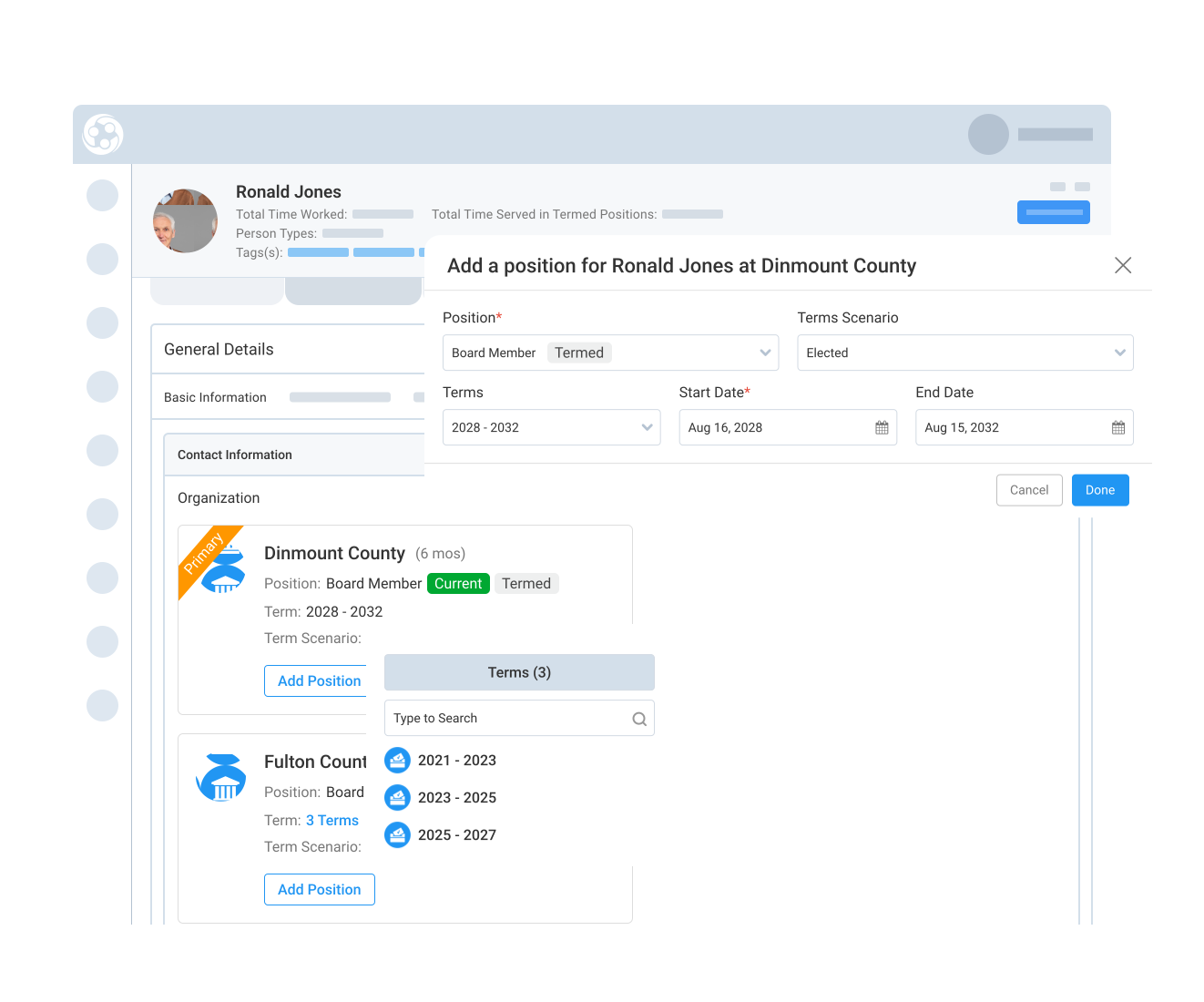
Engagifii helps staff maintain a complete view of a person’s elected or appointed service history. From a person’s profile, teams can see the positions they hold, the terms connected to those positions, start and end dates, and how long the person has served.
Staff can also add a new elected or appointed position directly from the person’s profile and connect that position to the correct term. This is helpful when someone is starting a new role, returning after a break in service, serving another term in the same position, or moving into a different elected or appointed role.
Term history can support one term, multiple consecutive terms, non-consecutive terms, and service across different positions or organizations. This gives associations a clearer way to understand each person’s leadership journey without losing important historical context.
Create and Manage Terms for Upcoming Election Cycles
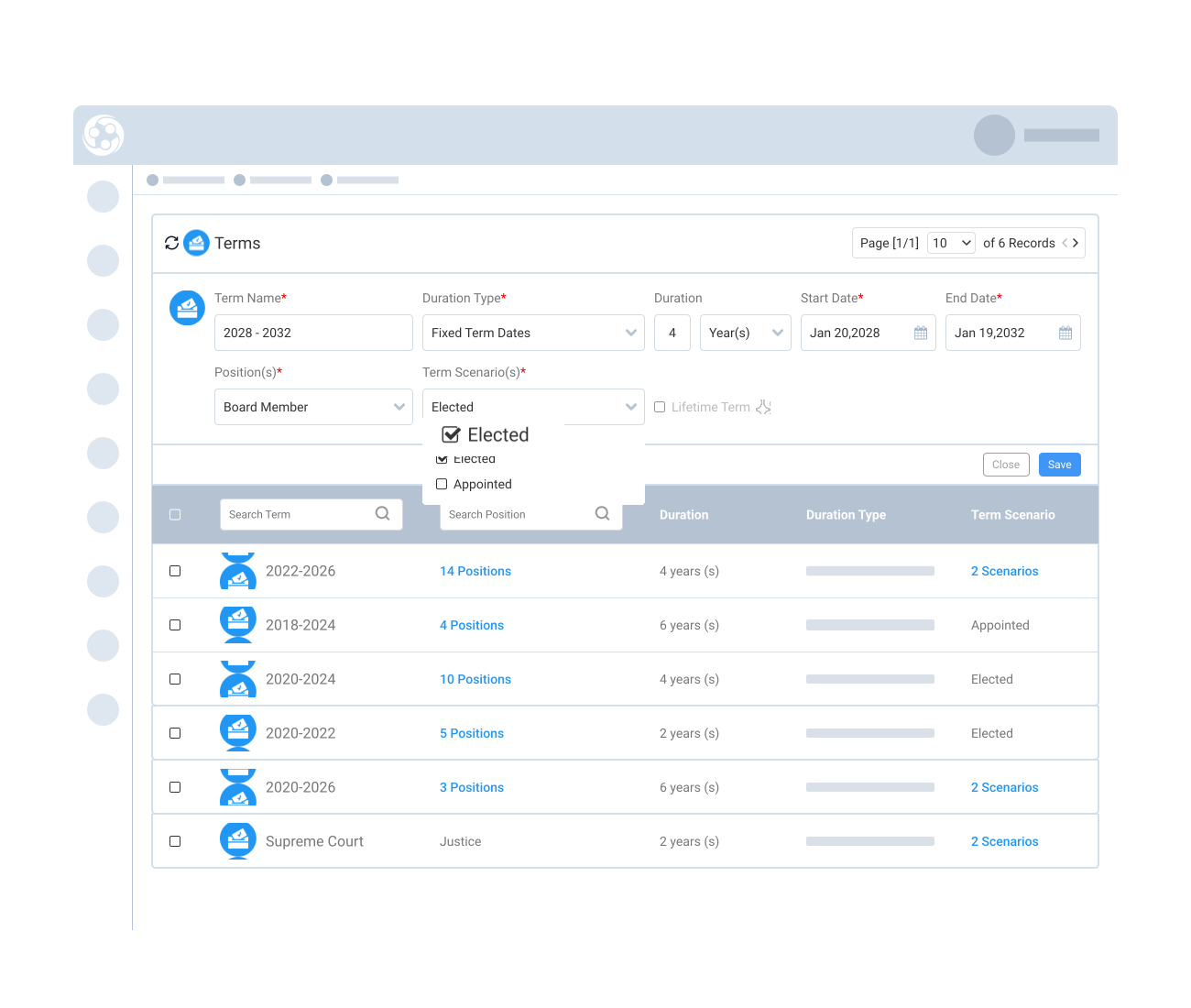
Engagifii allows staff to create terms that match how elected and appointed service works for their association. A term can be created with a name, duration type, start and end details, and the positions that belong to that term.
Duration can be fixed or flexible, depending on the role being tracked. Fixed terms are useful for positions with defined service windows, such as two-year, four-year, or six-year terms. Flexible terms can support appointed roles or service patterns that do not follow a standard end date.
The Terms page also gives staff a complete list of terms already created in the database, along with the positions and people connected to each term. This makes it easier to review current terms, prepare for upcoming election cycles, and keep the database organized before new officials take office.
Update Term Records After Election Results
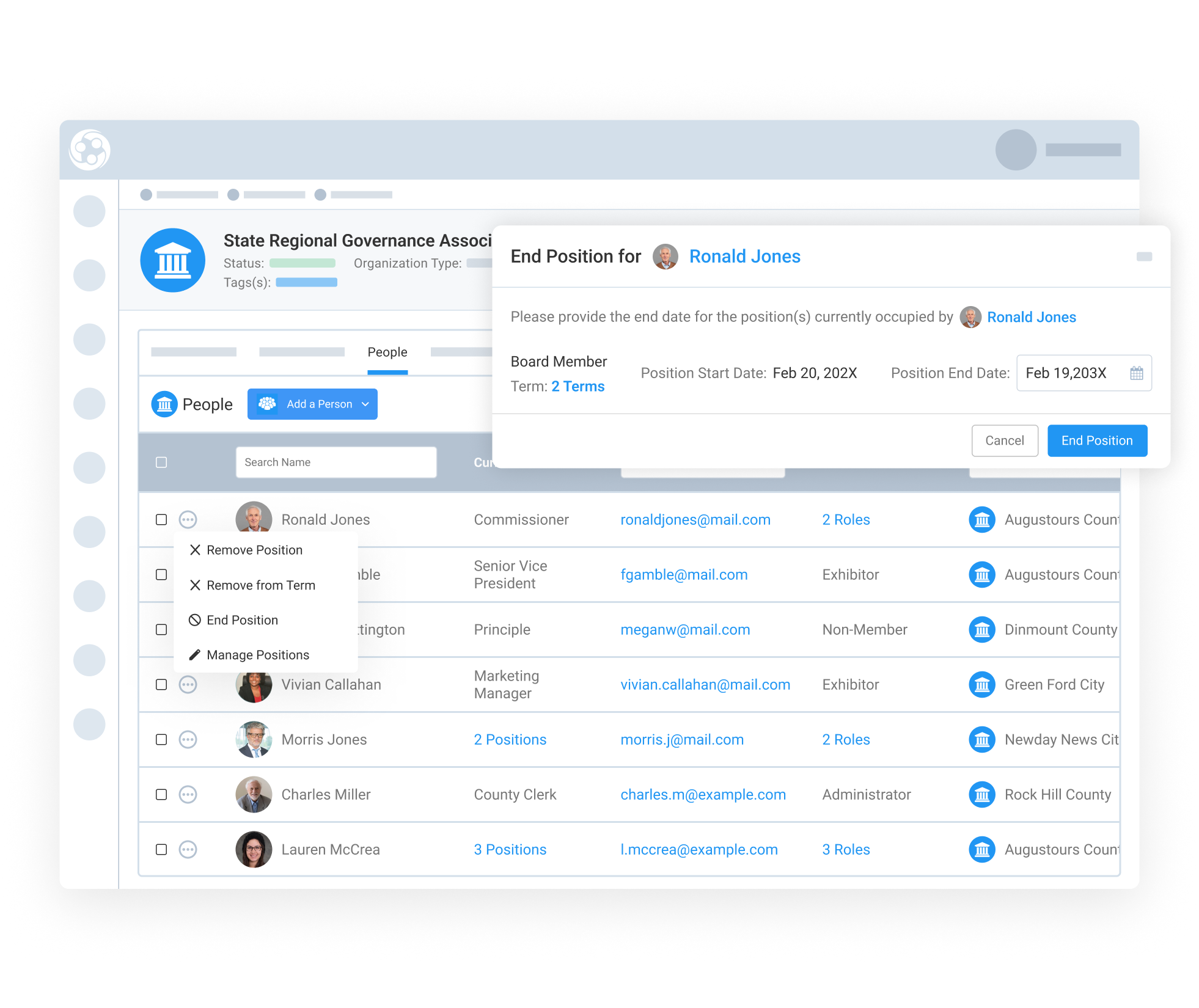
After election results are available, staff can update records to reflect who won, who lost, who is staying, and who is newly joining. If someone is leaving office, staff can end their position or remove them from the current term. If someone is replacing them or has been re-elected, staff can add or update that person’s position and connect them to the upcoming term.
This is especially helpful because there is usually a transition period between election results and the official start date. For example, if elections happen in November and the new term begins in January, staff can update both the outgoing and incoming records in advance. The outgoing person remains active until the correct end date, while the incoming or re-elected person is prepared with the right term, start date, and expected end date.
This helps associations avoid last-minute updates and keeps leadership records accurate through the transition period.